
Your anchor is what stands between your craft staying put and drifting off while you’re swimming, fishing, or making a cup of coffee. Get the right one and you’ll barely think about it. Get the wrong one and you’ll think about nothing else.
Whether you’re anchoring a ski boat in Algoa Bay, a kayak off the Eastern Cape coast, or a dinghy on one of our rivers or inland dams, choosing the right anchors in South Africa depends almost entirely on where you’re boating. The choice comes down to three main types.
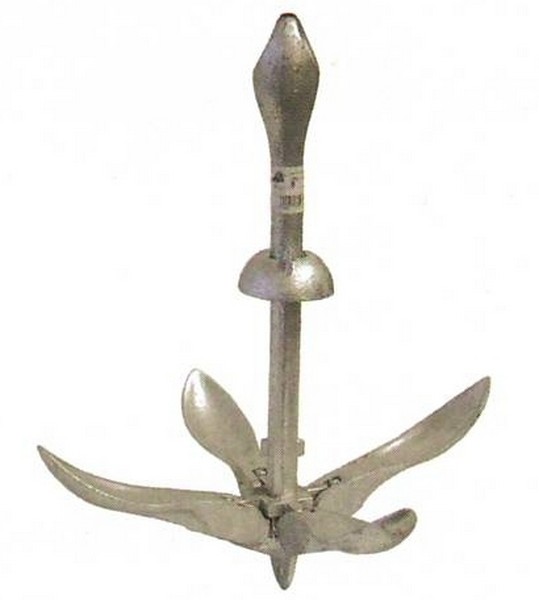
1. Folding Anchor (Grapnel)
The folding anchor uses several curved prongs that fold flat for storage, making it ideal for boats where deck space is tight.
Best seabed: Rocky bottoms, coral reefs, and heavy weed beds. The narrow prongs slide into crevices and snag onto rocks to hold the boat.
Use it for: Dinghies, inflatable boats, kayaks, and small fishing boats.
Avoid it on: Soft sand or deep mud. The prongs pull straight out without digging in, so it won’t hold.
Kayaker tip from Leisure Man: Due to limited space, a folding anchor is almost always the right call for kayaks. Leisure Man recommends a 0.7kg anchor for the sea to keep weight minimal, but you’ll need a rocky outcrop as it won’t hold over sand. If you’re paddling the Eastern Cape rivers, go with a 1.5kg folding anchor as a minimum.
At Nautical Sports in Gqeberha we stock kayak anchor kits that include an anchor, a short length of chain, and thin rope, all housed in a tough PVC bag to keep things neat and easy to stow.
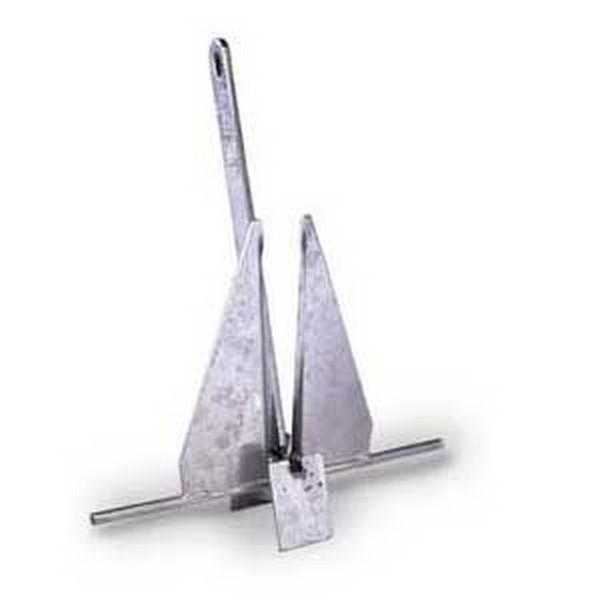
2. Danforth Anchor (Fluke)
The Danforth anchor has a flat, pivoting stock with two large triangular flukes that look like sharp wedges.
Best seabed: Fine sand, soft mud, and clay. The flukes dig deep into the sediment as tension increases, like a shovel being driven in harder the more you pull.
Use it for: Lakes, rivers, and sandy coastal areas. We are spoilt for choice when it comes to rivers in the Eastern Cape. Fish, Kei, Kowie, Bushmans, Sundays, Swartkops, Gamtoos, and Krom rivers. The Danforth is suitable for all of them. It provides impressive holding power for its weight and stores flat, making it a popular choice for ski boats.
Avoid it on: Rocky or heavily grassed bottoms where the flat flukes bounce off hard surfaces rather than penetrating. It also struggles to reset itself if the wind or tide causes your boat to swing 180 degrees.
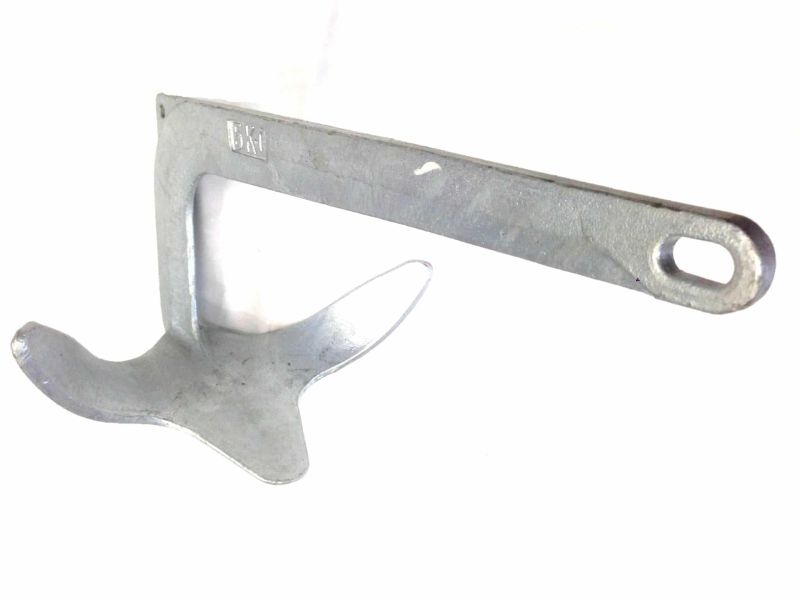
3. Bruce Anchor (Claw)
The Bruce anchor is a single, one-piece claw shape that looks like a smooth spade or plow.
Best seabed: Hard sand, soft mud, gravel, and even rock or coral. It handles mixed and unpredictable seabeds better than any other type.
Use it for: All-round daily anchoring, especially in areas where the seabed changes or the tide is unpredictable. Along the Eastern Cape coastline where mixed seabeds are common, the Bruce is a reliable all-rounder. If the wind shifts and pulls the boat around, the claw rolls over and resets itself quickly without breaking free.
Avoid: Undersized Bruce anchors. They need a bit more weight than a Danforth to achieve the same holding power in soft mud, so don’t go too light or skimp on the amount of chain.
Boat Anchors South Africa: Quick Selection Guide
| Anchor Type | Best Bottom | Ideal Boat Size | Main Benefit |
|---|---|---|---|
| Folding | Rocks, Coral, Weeds | Kayaks, Dinghies, PWCs | Folds compact for tight storage |
| Danforth | Sand, Mud, Clay | Small to Medium Boats | Maximum holding power in soft seabeds |
| Bruce | Mixed (Sand, Mud, Rock) | All sizes | Resets easily when wind or tide shifts |
One More Thing
Whatever anchor you choose, always set it up with a breakaway trip system. Leisure Man will be covering exactly how to do that in a future post, so watch this space.
Shop the full range of anchors at Nautical Sports in-store in Gqeberha or online.
Shop Anchors at Nautical Sports
Leisure Man is Nautical Sports’ resident gear expert, based in Gqeberha (Port Elizabeth). He lives for the water, the open road, and making sure your kit arrives in one piece, wherever in South Africa that might be.